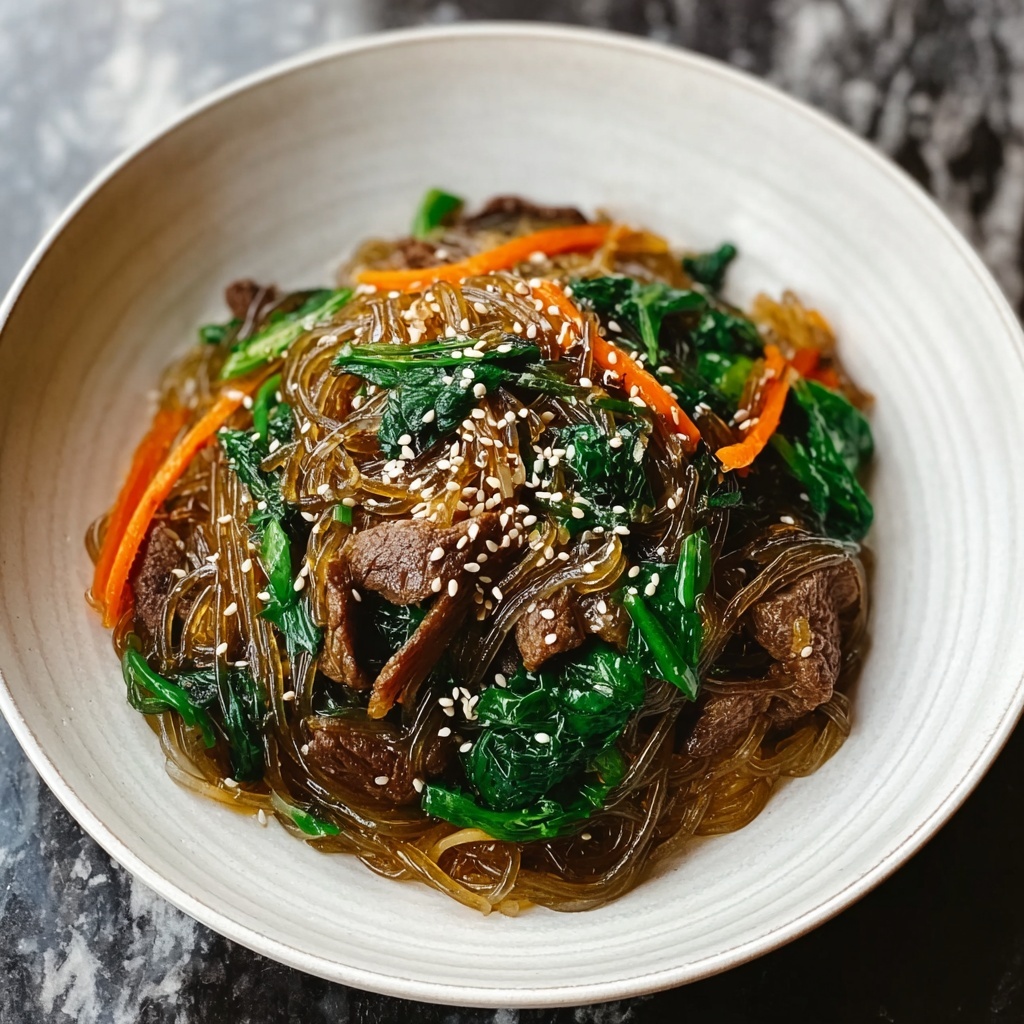
If you have yet to discover the magic of Japchae, get ready to fall in love with the Japchae (Korean Stir-Fried Glass Noodles with Beef and Vegetables) Recipe—a vibrant, flavorful dish that combines tender beef, colorful vegetables, and chewy sweet potato glass noodles all tossed in a sweet-savory sauce. This Korean classic is as stunning on the plate as it is on the palate, bringing a perfect harmony of textures and tastes that can brighten any meal. Whether you’re cooking for family or guests, Japchae offers a wonderful balance of nourishment and indulgence that’s truly unforgettable.
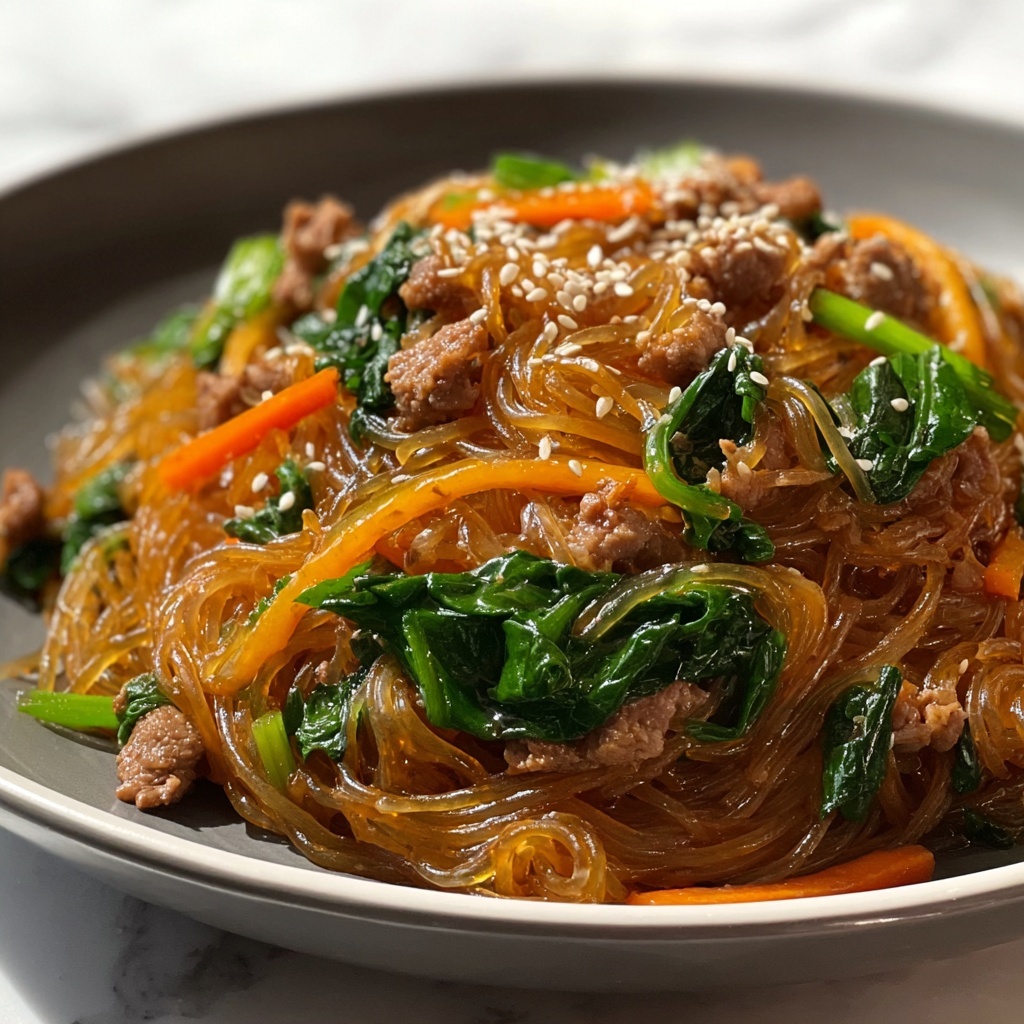
Ingredients You’ll Need
The beauty of this Japchae (Korean Stir-Fried Glass Noodles with Beef and Vegetables) Recipe is how straightforward the ingredients are—each one plays a key role in creating the dish’s vibrant texture and soulful flavor. From the tender beef to the crisp vegetables and aromatic sauces, every item is essential for that perfect balance.
- Thin-sliced beef (2 lb): Ensures tender, flavorful meat that soaks up the sauce beautifully; you can also swap with chicken, tofu, or shrimp for variety.
- Korean sweet potato noodles (1 lb): Known as glass noodles, these bring a wonderful chewy texture that’s fundamental to Japchae.
- Carrots (3 medium, julienned): Add a crisp sweetness and vibrant orange color to the dish.
- White onion (1 large, thinly sliced): Provides a slight natural sweetness and a mellow crunch.
- Green onions (½ bunch, chopped): Offer fresh, sharp bites and a pop of green that livens up the dish.
- Garlic cloves (6, minced): Brings deep pungency and warmth that elevates all the other flavors.
- Spinach leaves (½ lb): Adds a tender green earthiness and a boost of nutrition.
- Sesame oil (4 tbsp, divided): Imparts the nutty aroma that’s signature to this Korean recipe.
- Olive oil (1 tbsp): Used for cooking and provides a light, subtle background fat.
- Soy sauce (6 tbsp): The salty, umami backbone of the dish that perfectly balances the sweetness (use tamari for gluten-free).
- Brown sugar (3 tbsp): Introduces gentle sweetness that rounds out the savory ingredients beautifully.
How to Make Japchae (Korean Stir-Fried Glass Noodles with Beef and Vegetables) Recipe
Step 1: Cook the Noodles
Start with boiling a large pot of water, adding a drizzle of olive oil to prevent the sweet potato noodles from sticking together. Drop in the noodles and cook them for 5 to 6 minutes until tender but still slightly chewy. When they are perfectly cooked, drain and set them aside. This step is crucial because the noodles act as the canvas for all the flavors to come.
Step 2: Cook the Beef
Heat a skillet over high heat and add the thin-sliced beef. Cook it quickly until it’s browned and caramelized on the edges. While it cooks, season with half of the soy sauce, sesame oil, and brown sugar to infuse it with that signature sweet-savory punch. Once the beef is perfectly seasoned and cooked through, set it aside to rest.
Step 3: Sauté the Vegetables
In another skillet, warm the olive oil and toss in the julienned carrots and thinly sliced onions. Cook them gently until they soften and their natural sweetness blooms. Add the remaining soy sauce, sesame oil, and brown sugar, then stir in the minced garlic and chopped green onions, cooking for another minute. This quick sauté enhances the vegetables’ natural flavors while building layers of savory sweetness.
Step 4: Add the Spinach
Toss in the spinach leaves and stir until they wilt just enough to become tender and vibrant. The spinach adds a fresh, slightly earthy note that balances the dish beautifully and keeps it feeling bright and colorful.
Step 5: Combine Ingredients
Now, bring everything together. Add the cooked beef and sautéed vegetables to the bowl with the prepared noodles. Toss everything thoroughly so that every noodle strand is coated with the lovely sauce and studded with delicious bits of beef and vegetables. This final mixing is where the flavors meld into that perfect harmony we all crave.
Step 6: Serve
Japchae is best enjoyed warm straight from the pan. Garnish with a few extra chopped green onions if you like, adding a burst of color and freshness just before serving. The contrast of warm, toothsome noodles and vibrant veggies is a delight that’s hard to resist.
How to Serve Japchae (Korean Stir-Fried Glass Noodles with Beef and Vegetables) Recipe
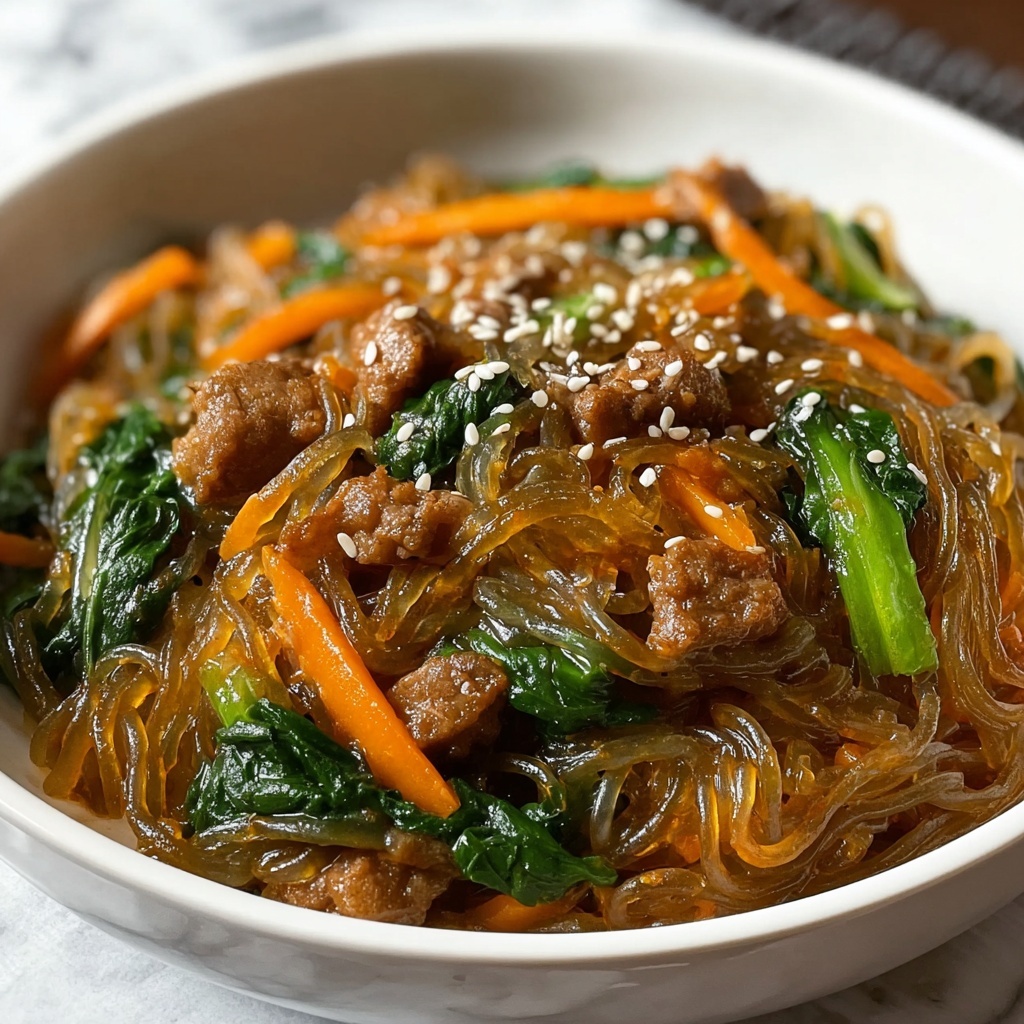
Garnishes
Fresh green onions or toasted sesame seeds add a nice finishing touch to your Japchae (Korean Stir-Fried Glass Noodles with Beef and Vegetables) Recipe, offering a little crunch and an extra layer of flavor. If you want a touch of heat, a sprinkle of chili flakes or thinly sliced fresh chili can elevate the dish without overpowering it.
Side Dishes
Japchae pairs wonderfully with simple steamed rice or a light kimchi side to add a tangy contrast. Traditional Korean meals often include small banchan (side dishes), so little bowls of pickled radishes or seasoned bean sprouts would complete the experience perfectly.
Creative Ways to Present
For a fun twist, try presenting Japchae in lettuce cups for a refreshing handheld bite, or layer it in a glass parfait for a visually stunning appetizer. You can also top it with a fried egg for breakfast or brunch, making the dish even more hearty and satisfying.
Make Ahead and Storage
Storing Leftovers
Japchae keeps well in the fridge for up to three days when stored in an airtight container. This recipe’s combination of noodles and crisp veggies maintains its delicious texture even after cooling, making it a great option for quick lunches or dinner reheats.
Freezing
While freezing Japchae is possible, it’s best to avoid if you want to preserve the ideal texture of the noodles and vegetables. If you do freeze it, separate portions and thaw slowly in the refrigerator before reheating gently to avoid mushiness.
Reheating
To reheat your Japchae, use a skillet over medium heat and toss the leftovers with a splash of water or a tiny drizzle of sesame oil to revive the softness of the noodles and keep everything from drying out. Avoid microwaving if you can as it sometimes makes the noodles chewy or tough.
FAQs
Can I make Japchae vegetarian or vegan?
Absolutely! You can easily substitute the beef with tofu or mushrooms and use gluten-free tamari instead of soy sauce. The dish is very adaptable and still tastes amazing without meat.
What type of noodles are best for Japchae?
The traditional choice is Korean sweet potato noodles, also called glass noodles, known for their chewy texture and ability to soak up flavors beautifully. They’re essential to authentic Japchae but can be found in most Asian grocery stores or online.
How long does Japchae stay fresh?
Stored properly in the refrigerator, Japchae will stay fresh for about 3 days. For the best taste and texture, try to enjoy it within this window.
Can I prepare Japchae ahead of time for a party?
Yes, you can prepare most of the ingredients ahead. It’s best to cook the noodles and vegetables separately then combine right before serving to keep everything fresh and vibrant.
Is Japchae gluten-free?
Japchae can be gluten-free if you use tamari instead of regular soy sauce. Always check your noodle packaging and sauce ingredients to ensure they don’t contain gluten.
Final Thoughts
This Japchae (Korean Stir-Fried Glass Noodles with Beef and Vegetables) Recipe is one of those dishes that quickly becomes a beloved staple wherever it’s served. With its irresistible combination of tender noodles, flavorful beef, and a colorful medley of perfectly cooked vegetables, it’s a delightful celebration of Korean flavors that’s both comforting and exciting. I encourage you to give this recipe a try—you’ll find it’s not only easier to make than you think but also an absolute crowd-pleaser for any occasion.
Print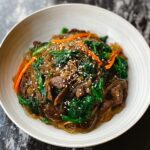
Japchae (Korean Stir-Fried Glass Noodles with Beef and Vegetables) Recipe
- Prep Time: 15 minutes
- Cook Time: 20 minutes
- Total Time: 35 minutes
- Yield: 4 to 4 servings
- Category: Main Course
- Method: Stovetop
- Cuisine: Korean
- Diet: Gluten Free
Description
Japchae is a classic Korean dish featuring sweet potato glass noodles stir-fried with tender beef and a colorful mix of sautéed vegetables, all balanced with a savory-sweet soy and sesame oil sauce. This dish is vibrant, flavorful, and perfect for a healthy, satisfying meal that serves 4 to 4 people.
Ingredients
Protein
- 2 lb thin-sliced beef (or substitute with chicken, tofu, or shrimp)
Noodles
- 1 lb Korean sweet potato noodles (glass noodles)
Vegetables
- 3 medium carrots, julienned
- 1 large white onion, thinly sliced
- ½ bunch green onions, chopped
- 6 garlic cloves, minced
- ½ lb spinach leaves
Oils & Sauces
- 4 tbsp sesame oil (divided)
- 1 tbsp olive oil
- 6 tbsp soy sauce (or tamari for gluten-free)
- 3 tbsp brown sugar
Instructions
- Cook the Noodles: Bring water to a boil in a large pot with a drizzle of olive oil. Add the sweet potato noodles and cook for 5-6 minutes until tender. Drain and set aside to prevent sticking.
- Cook the Beef: Heat a skillet over high heat and cook the thinly sliced beef until browned and cooked through. Season with half of the soy sauce, sesame oil, and brown sugar while cooking to infuse flavor. Once done, remove from heat and set aside.
- Sauté the Vegetables: In another skillet, heat olive oil over medium heat. Add julienned carrots and sliced onions, cooking until softened and slightly caramelized. Stir in the remaining soy sauce, sesame oil, and brown sugar for seasoning. Add minced garlic and chopped green onions, cooking for an additional minute to release their aroma.
- Add the Spinach: Toss in the spinach leaves and stir continuously until they wilt down and integrate into the vegetable mixture.
- Combine Ingredients: In a large bowl, combine the cooked noodles, sautéed vegetables, and cooked beef. Toss everything thoroughly to ensure the flavors blend and the dish is evenly coated with the savory sauce.
- Serve: Serve the Japchae warm, optionally garnished with extra chopped green onions for freshness and added flavor.
Notes
- You can substitute beef with chicken, tofu, or shrimp for different protein options.
- Using tamari instead of soy sauce makes this dish gluten-free.
- Be careful not to overcook the glass noodles, as they can become mushy.
- For a more vibrant presentation, you can add other vegetables such as bell peppers or mushrooms.
- Traditionally, japchae is served at room temperature or warm.